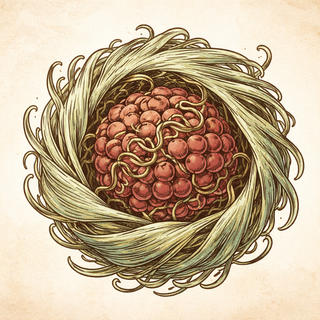
Going once, going twice, sold - to the scrappiest little nanoplatform in the room, a gadget that basically waits for cancer cells to show their fake VIP badge and then starts chemical mayhem on-site.
Going once, going twice, sold - to the scrappiest little nanoplatform in the room, a gadget that basically waits for cancer cells to show their fake VIP badge and then starts chemical mayhem on-site.
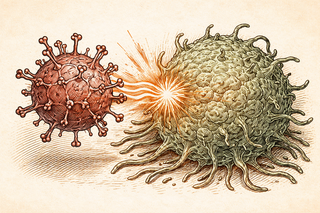
If Dune: Part Two taught us anything in 2024, it is that winning the fight is not just about showing up with weapons - it is about timing, terrain, and springing the trap when your opponent thinks the coast is clear. That is basically the chess match in a new ACS Nano paper, published online April...
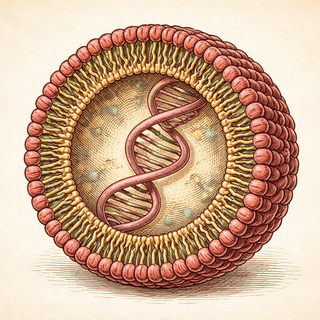
The key player here is calreticulin, a protein that can act like an "eat me" sign when stressed or dying cancer cells display it on their surface. That matters because immunogenic cell death, or ICD, is not just cancer cells dying. It is cancer cells dying loudly enough that the immune system...
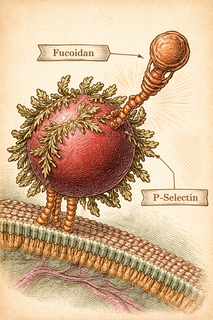
Cancer drugs often fail because they pick one enemy in a room full of accomplices. That is the paradox sitting at the center of this new paper: the tumor is not just a bad cell problem, it is a bad neighborhood problem, and bringing one very stern bouncer to a riot rarely ends well.
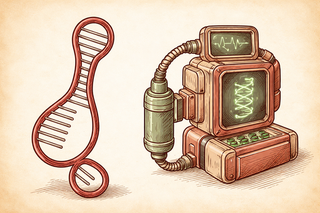
MicroRNAs are short RNA snippets that help control which genes get expressed and when. Think of them as the group chat moderators of the cell. Quiet most days, wildly influential when things go off the rails. In cancer, certain microRNAs show up at odd levels in blood and other fluids, which is why...
Obituary: "Wait until lung cancer causes symptoms, then scramble." It had a long run, mostly powered by bad odds and crossed fingers, and medicine should really stop sending it flowers.
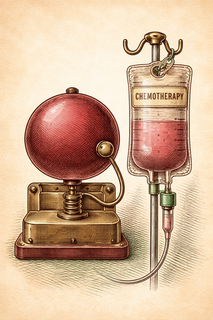
The Oncology Care Model, or OCM, was supposed to fix a very American problem: we pay for cancer care in ways that sometimes reward more stuff, not better care. But OCM had a built-in paranoia twist. Since a payment episode started when a patient got systemic therapy, critics worried practices might...
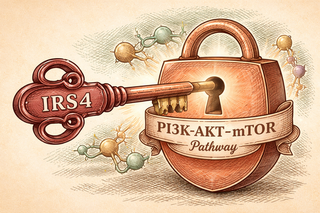
IRS4 belongs to the insulin receptor substrate family, which sounds bland enough to be filed next to staplers.[2] In practice, these proteins help pass messages from the cell surface to growth pathways inside the cell. One of those pathways is PI3K-AKT-mTOR, the molecular equivalent of a gas pedal...
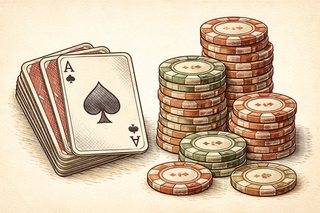
Beating a first cancer can feel like dragging a mountain of chips to your side of the table, only to notice the dealer quietly shuffling another deck. That, in a slightly rude nutshell, is what this new U.S. study examined: not recurrence, not spread, but a genuinely new cancer appearing later in...
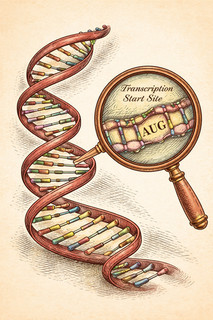
A healthy body parents its cells the way a decent adult handles a sugar-fueled toddler in a store: constant supervision, quick redirects, and the occasional hard stop before somebody knocks over the entire display. Most cells cooperate. A few go feral. Cancer, as usual, is what happens when the...
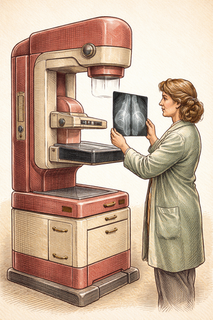
If dense breast tissue had a social media bio, it would absolutely read: "Thick, mysterious, and accidentally blocking the radiologist's view." Not evil. Not dramatic. Just standing there like a fog machine in a detective movie while everybody tries to spot the actual problem.
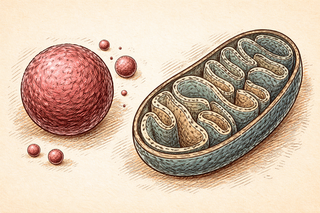
Brush away enough molecular dust and a tumor starts to look less like a solid mass and more like an archaeological site - layers of defenses, hidden tunnels, and the occasional booby trap for any drug dumb enough to walk in through the front door. That is the mood of this new ACS Nano paper, which...
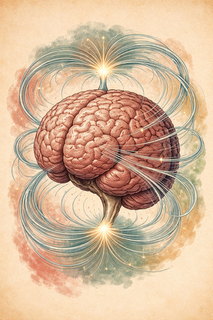
Tumor-treating fields, or TTFields, already have a real clinical role in glioblastoma. They use low-intensity alternating electric fields, delivered through arrays on the scalp, to mess with dividing tumor cells. Think less Frankenstein, more very targeted cellular bureaucratic sabotage. The fields...
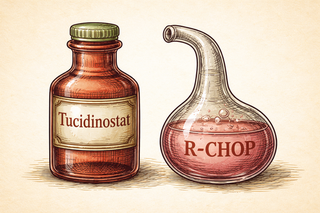
That, more or less, is the plot of a new randomized clinical trial in JAMA looking at tucidinostat plus R-CHOP for a nasty subtype of diffuse large B-cell lymphoma called MYC/BCL2 double-expressor lymphoma, or DEL for short. DEL is basically DLBCL with two molecular troublemakers, MYC and BCL2,...
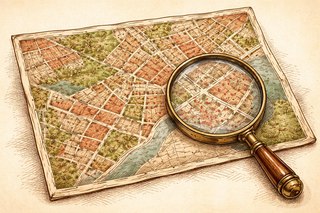
Most studies zoom in. This one zooms out without going blurry. In Nature Communications, Liang and colleagues introduce CellNiche, a machine-learning system built to read spatial omics data at ridiculous scale and still keep track of who is standing next to whom, who is acting suspiciously, and...
The paper, published in The Journal of Clinical Investigation, used mouse tumor models and human cancer data to ask a pretty practical question: what keeps cDC1s functional inside the tumor microenvironment, which is basically a biochemical swamp with terrible management? The researchers found that...
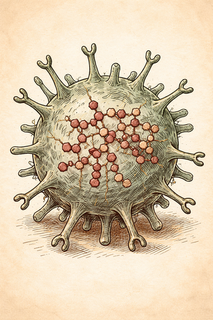
Every cell in your body is covered in glycans, which are sugar chains stuck to proteins and lipids. Sialic acids often sit at the outer edge of that coat, like the last visible bead on a bracelet. Immune cells use receptors called Siglecs - short for sialic acid-binding immunoglobulin-like lectins...
Most childhood leukemias do not give you a neat prequel. Myeloid leukemia of Down syndrome does, which is one reason scientists keep staring at it like detectives with too much coffee. Kids with Down syndrome have a dramatically increased risk of this leukemia, and before the full disease appears,...
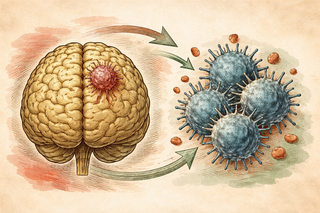
Cancer has many talents, and one of its rudest is convincing your immune system to mind its own business. This phase I study tested a two-drug combo - ipatasertib plus atezolizumab - in people with treatment-refractory solid tumors and recurrent glioblastoma, and the interesting bit was not just...
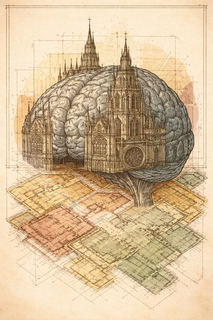
If the brain is a cathedral of wiring, glioblastoma is the contractor from hell - knocking through load-bearing walls, installing mystery doors, and somehow leaving you with the bill. The new twist is that this tumor does not just change which genes it uses. It keeps issuing weird alternate...