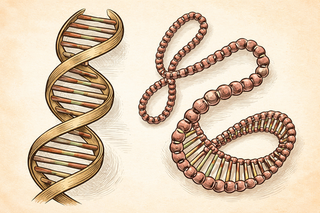
Let me tell you about a molecular con artist that's been flying under the radar for years.
Let me tell you about a molecular con artist that's been flying under the radar for years.
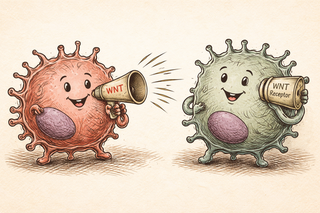
Thirty trillion. That's roughly how many cells make up your body, and every single one of them knows its place and job. Except, of course, when cancer crashes the party and starts rewriting the rulebook.
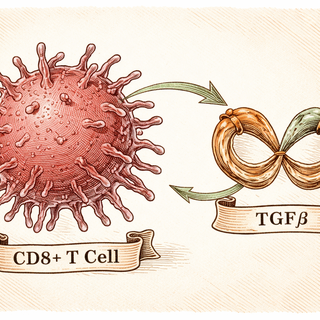
Pancreatic cancer has been running circles around modern medicine for decades. With a five-year survival rate stubbornly parked at 13% and checkpoint immunotherapy benefiting fewer than 1% of patients, PDAC (pancreatic ductal adenocarcinoma, for those who like their acronyms painful) has earned its...
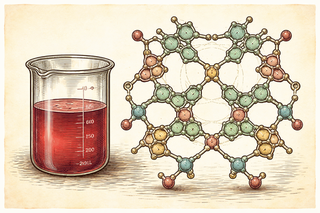
For years, there was this awkward silence in photodynamic therapy research - the kind of silence that happens when everyone's pretending not to notice the elephant in the room. The elephant? Tumors are often hypoxic, meaning they're low on oxygen. And the main weapon we had against them - a...

The problem with lumping all Asian Americans into one statistical bucket is that you end up with a survival rate smoothie - technically accurate on average, but completely useless for understanding what's actually happening to real people.
The villain wasn't hiding in the shadows—it was already inside the house, pretending to be furniture.

Breast cancer screening in America has been stuck at the same red light for decades. Every woman over 40, line up, get your annual mammogram, move along - no detours, no express lanes, no consideration for whether you're driving a moped or a semi-truck. Laura Esserman, Olufunmilayo Olopade, and...
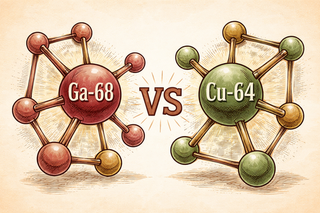
Two molecular imaging agents walk into a prostate cancer clinic. One's been running the show for years. The other just showed up with better stats and a longer half-life. Things are about to get interesting.
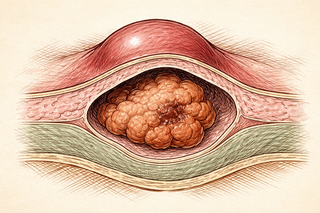
A middle-aged woman walks into a colonoscopy, and the gastroenterologist spots something weird in her rectum. Sounds like the setup to a bad joke, but for the doctors at Showa University Northern Yokohama Hospital, it was the beginning of a diagnostic head-scratcher that landed in the pages of Gut...

Hey there, Medicare budget line items. Yeah, you - the ones labeled "cancer care spending." We need to talk.

Here's a math problem: 291 patients, split into two groups, one weapon added to the arsenal, and a 55% reduction in the risk of cancer getting worse. If your oncologist handed you those odds on a napkin, you'd probably ask for the check and head straight to the clinic.
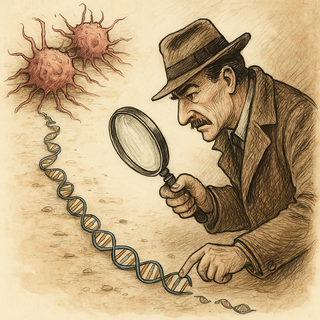
You have surgery. The tumor comes out. The margins are clear. The scans look clean. Your oncologist says the reassuring words: "We got it all." But did they? In a meaningful number of cases, microscopic cancer cells remain - too few to see on any scan, lurking in tissue or circulation, waiting to...
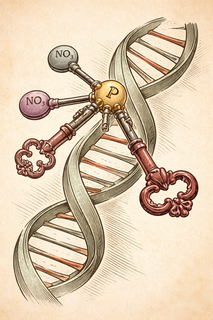
Most photosensitizers - those light-activated molecules designed to torch cancer cells - never make it past the front door. They float around the cytoplasm like a security team that can't get into the building they're supposed to protect. P-NO3, the molecule at the center of a new study published...
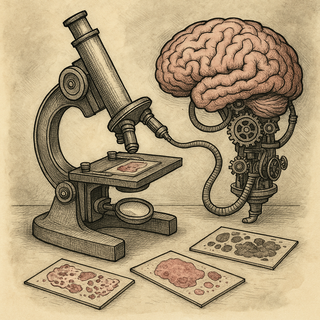
A pathologist looks at a tissue slide under a microscope, evaluates cell morphology, architecture, staining patterns, and invasion depth, then renders a diagnosis. This process has been the backbone of cancer diagnosis for over a century. It is also subjective, time-consuming, and limited by human...
Dateline: The Prostate Gland, Under Siege
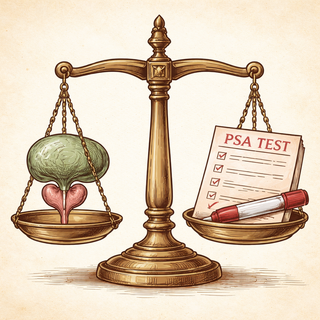
Testosterone: the molecule your body uses to build muscle, deepen voices, and - occasionally - fuel prostate cancer cells that didn't get the memo about behaving themselves after surgery. For years, doctors treating men whose prostate cancer came back after surgery faced a nagging question: when...
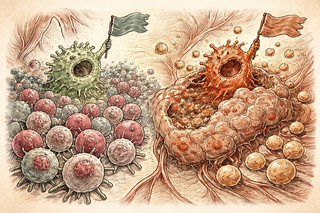
Two armies occupy the same territory, but only one of them is fighting for you.
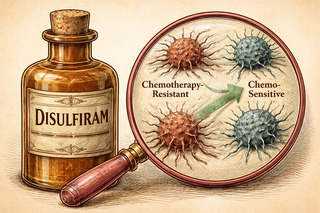
Tomorrow morning, a woman with metastatic ER-positive breast cancer will learn her tumors have stopped responding to chemotherapy. Her oncologist will flip through the limited options remaining, searching for something - anything - that might buy more time. What if the answer has been sitting in...
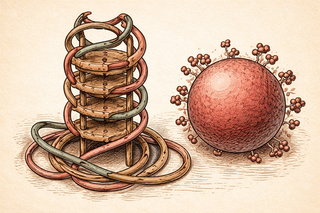
Picture a team of scientists sitting around a lab bench, staring at cancer's playbook, and thinking: "What if we built something that attacks from three directions at once?"
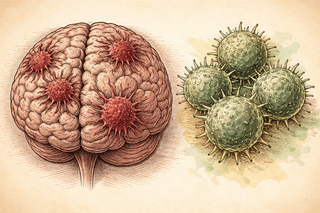
Picture the most audacious heist in cellular history. The target? Branched-chain amino acids—the premium fuel that keeps your immune system's elite strike force running. The thieves? Glioblastoma cells, pulling off a metabolic caper so sophisticated it would make Danny Ocean jealous. And until now,...